
Night guards & retainers · At Yonge & Dundas
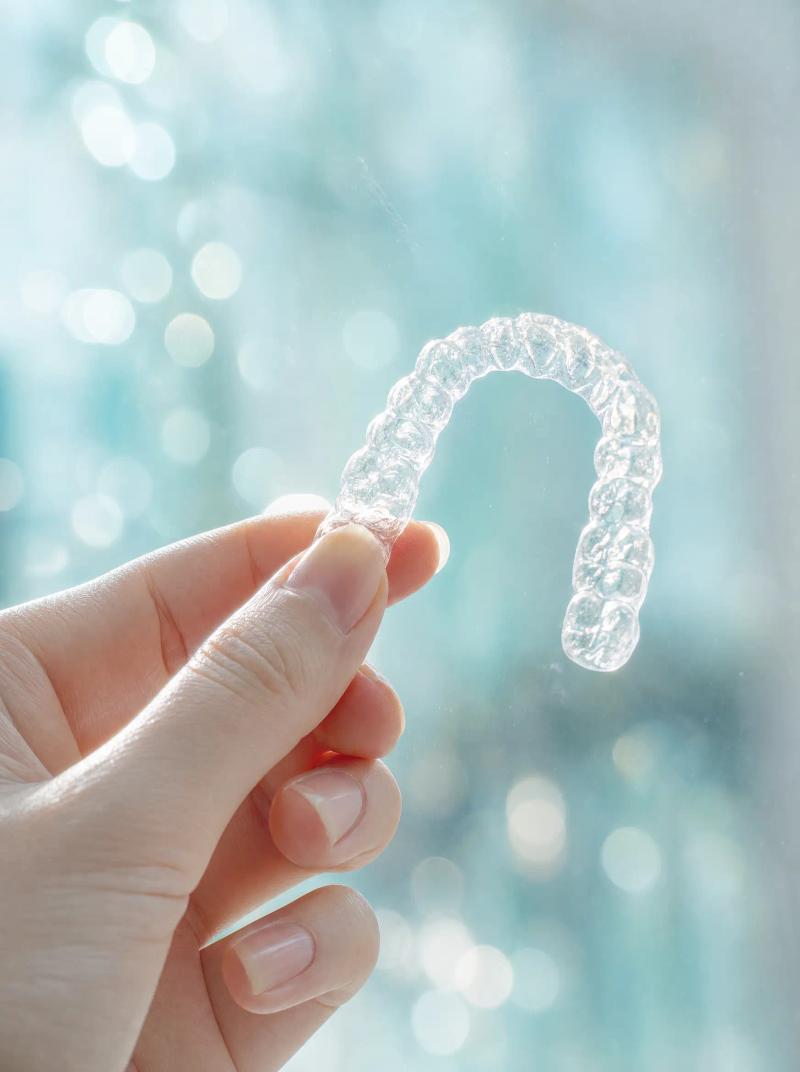
Night guards and retainers, made to your own teeth.
That gold stretch is the whole job. Everything an appliance does, it does inside a window you sleep through — and outside it, it is plastic in a case on a shelf.
A night guard puts a layer of plastic between your teeth, so grinding wears that instead of enamel, and it can help the jaw muscles relax. It does not treat the disorder behind TMJ pain, and a retainer holds teeth where orthodontics left them only for as long as you wear it.
- Cost
- Quoted at the exam
- Night guard
- Protects teeth · not a cure
- Retainer
- Holds while it is worn
- Made from
- A scan or an impression
Why people get one
“I need something to wear.” Usually somebody else noticed first.
- 01You wake with a tight jaw, or someone has told you they can hear the grinding
- 02A dentist has pointed at flattened, polished edges on your back teeth
- 03Your braces or aligners came off and the retainer has been in a drawer since
- 04A tooth that used to line up with the others doesn’t quite line up any more
Before anything else
What these appliances do, and the four things they don’t.
What an appliance can do for you, and what it cannot, decides whether the rest of this is worth your time. So it comes first, in the same size as everything else.
What they are
A layer in the way
A night guard sits between the upper and lower teeth so grinding wears the plastic rather than enamel.
An even position, overnight
It holds the jaw somewhere repeatable while you sleep, which can help the muscles relax.
A hold on a finished position
A retainer keeps teeth where orthodontics left them, for exactly as long as it is worn.
Made to your own teeth
Both are built at a dental laboratory from a scan or an impression, then adjusted in the chair.
What they are not
It does not cure TMJ disorder
A night guard manages a symptom and protects teeth from further wear. The disorder behind the pain is a separate question, and no appliance answers it. If your jaw pain needs more than this, the exam is where you find out.
A sleep apnea appliance is a different device
Those are prescribed on the back of a physician’s sleep study, and this clinic does not treat sleep apnea. If you have been told you snore heavily or stop breathing in your sleep, that starts with your doctor.
A sports guard is a separate appliance
The two are built for different forces: slow, heavy clenching against a single impact. Neither one substitutes for the other.
See the sports guards pageNothing here is promised
How much you will notice, and how long a piece of plastic will survive in your mouth, are both things nobody can tell you in advance. So nobody here is going to.
How it protects
The guard wears down so the enamel doesn’t.
Enamel doesn’t grow back. Grinding takes it off slowly, over years, and the only thing a piece of plastic can do about that is get in the way and be taken off instead.
The guard
Takes the load. Scores, flattens, dulls.
Your enamel
Underneath it. Unchanged, for those hours.
A diagram rather than a measurement: how fast a guard wears depends on the person wearing it, and no figure for that is published here.
What that means for you
Three things follow, and none of them is a promise.
- 01A scratched, flattened guard is a working guard. That wear is wear that did not reach a tooth.
- 02It is a consumable. Replacing one every so often is how the arrangement works.
- 03It protects; it does not diagnose. Why you are grinding is a separate question, and the exam is where it gets asked.
Why the retainer isn’t a formality
Teeth keep moving after orthodontics ends.
The ligament that anchors a tooth spends its life pulling it back toward where it came from, and a bite keeps changing slowly with age regardless. Orthodontics doesn’t switch that off. It produces a position, and a retainer is what holds one.
What that means
Retention is something you keep doing.
- 01The drift is ordinary. Nothing about it means your treatment, your teeth or anything you did went wrong.
- 02A retainer holds the position while it is worn. It does not make anything permanent, and nothing here will be sold to you as permanent.
- 03How much wear, and how often, is a question for the dentist who has seen your case — not a schedule to read off a website.
How it goes
Two appointments, then a habit.
Nothing is ordered from a catalogue and nothing is made before the mouth it is for has been looked at. The first appointment is allowed to end with “not this”.
- 01
The exam, before the appliance
The first question is what is wearing the teeth down. The dentist looks at the wear itself, how the teeth meet, and what the jaw is doing. If the problem is one an appliance will not touch, you hear that at the exam.
Before anything is made
- 02
The model
A scan or an impression captures your teeth as they are now. The appliance is made to that model at a dental laboratory, which is why it grips your teeth rather than being held in by your jaw.
One appointment
- 03
The fit
It goes in, the bite is checked, and anything sitting high is adjusted in the chair. You leave knowing how to clean it, where to keep it, and what it should and shouldn’t feel like.
One appointment
- 04
The check-ups
Bring it to your cleanings. A night guard is meant to wear down, and teeth change shape as dental work is done on them, so an appliance that fitted last year is worth having looked at again.
For as long as you have it
Worth wearing for
The case for it, kept inside what it can do.
The plastic takes it instead
A night guard is a sacrificial layer: every scratch and flattened patch on it is one that did not happen to enamel. A guard that looks chewed up has been working, and replacing it every so often is normal.
An even position overnight
A guard holds the jaw somewhere even and repeatable while you sleep, which can help the muscles relax. Some people notice less morning tightness and some do not, and nobody can tell you in advance which you will be.
A retainer holds while it is worn
Teeth keep moving through adult life, with or without orthodontics. A retainer holds the position it was made for as long as you wear it, and that is the whole of what one does.
Made to your mouth
Both appliances are made to a model of your own teeth, so they seat on the teeth themselves. A guard you have to hold in place is a guard that comes out the moment you turn over.
What it costs
Both numbers come out of the exam.
What an appliance costs turns on which one it is and what the laboratory has to make, so there is no single figure to publish here. You get yours at the exam, in writing, before a model is taken, and the desk checks your coverage at the same time.
If a published figure would settle something for you today, the ones this practice does stand behind are a click away: the exam and cleaning are $181–$301, and whitening is $750 flat.
- Night guard
- Quoted at the exam
- Retainer
- Quoted at the exam
- Insurance
- Checked before anything is made
Coverage is checked before anything is made, so you know what is left to pay before a model is ever taken.
Proof
Patients, verbatim.
“Incredibly knowledgeable, friendly, and they do what they can to make your visit as comfortable as possible. The utmost professionalism no matter the situation.”
“My favourite place! The dental hygienist, reception and Dr are all amazing. Dr. Lana is fantastic and really cares about all her patients.”
Worth asking
What people ask about night guards
Will a night guard cure my TMJ problem?
No. A night guard manages a symptom and protects the teeth from further wear; the disorder behind the pain is a separate question. What the guard does is put a layer of plastic between the teeth so grinding wears that instead of enamel, and hold the jaw in an even position overnight, which can help the muscles relax. Whether the underlying problem needs anything further is a question for the exam.
Will it stop me grinding?
No. It is built to take the grinding rather than to stop it. Clenching and grinding have causes an appliance does not reach, and how much you notice varies from person to person, so no promise is made about either.
How much is a night guard or a retainer?
No figure is published for either yet. Both are quoted at the exam, in writing, before anything is made, and your coverage is checked at the same time.
Is a night guard the same thing as a sleep apnea appliance?
No, and this clinic does not treat sleep apnea. Sleep apnea is a medical diagnosis, and the appliances made for it are a different device prescribed on the back of a physician’s sleep study. If you snore heavily or have been told you stop breathing in your sleep, that belongs with your doctor first.
Can I wear a night guard to play sport?
No. The two are built for different forces: a night guard takes the slow, heavy load of clenching, while a sports guard is built to absorb an impact. A sports guard is a separate appliance and has its own page.
Do teeth really move if I stop wearing my retainer?
Yes. Teeth sit in bone on a ligament that keeps pulling them back toward where they came from, and they go on shifting slowly through adult life whether or not you have had orthodontics. That is the entire reason retainers exist. Wearing it holds the position; stopping does not.
How long does an appliance last?
There is no guaranteed lifespan. A night guard is meant to wear down, so how fast depends on how hard you grind, and a retainer can be lost, warped by heat, or outgrown. Bring whichever you have to your cleanings so it can be looked at.
Will insurance cover it?
Sometimes, and often only partly. The desk checks your plan and tells you what applies before the appliance is made.
Book a visit
Find out what is actually wearing your teeth down.
The exam looks at the wear, the bite and the jaw before anything is made, and the price comes in writing.